It's trash day. You wheel the bin back up the driveway, lift the lid to drop in one more bag, and there it is: that sour, heavy smell that seems to come from the plastic itself. You hold your breath, toss the bag in and close the lid a little faster than you need to.
If that sounds familiar, you're in good company. We clean bins across Waltham, Newton, Watertown, Belmont and Lexington, and the smell is the reason most people get in touch. So here's what's happening in there, and what you can do about it.
Where the smell comes from
Even when the truck empties your bin, it doesn't take everything with it. A splash of juice from a torn bag, a smear of grease from a pizza box, a few drips from a meat tray. Those leftovers settle into the bottom corners and the seams around the lid, and bacteria get to work breaking them down. That breakdown is what you're smelling.
A few things make it worse:
- Heat. A dark plastic bin sitting in the sun gets warm inside, and warmth speeds everything up. It's why the smell seems to double in July.
- Liquid. Moisture pooled at the bottom gives the mess somewhere to live between pickups.
- Flies. A smelly bin draws them in, and if they get inside, they can lay eggs. That's how maggots show up.
- Time. Every week adds a fresh layer on top of whatever was already there.
What you can do about it yourself
Here's our honest advice, whether or not you ever call us:
- Bag everything and tie it tight. Loose food and leaking bags are where most of the mess starts.
- Double-bag meat, fish and anything wet. If pickup is a few days away, some people keep meat scraps in the freezer until trash day.
- Keep the lid fully closed. It keeps flies out and the smell in.
- Line the bottom with newspaper or a flattened cardboard box to soak up drips, and swap it out when it gets damp.
- Sprinkle baking soda in the bottom of a clean, dry bin to help absorb odors.
- Give it a rinse. A hose, some dish soap and a long-handled brush will take care of fresh mess. Then tip the bin upside down to dry in the sun.
Two notes on that last one. Rinse the bin on your lawn or a gravel area, away from the street, because storm drains usually carry water to local streams and ponds without treating it. And never mix cleaning products. Bleach and ammonia together, for example, give off a dangerous gas.
When a rinse isn't enough
A garden hose does a fair job on last week's spill. It struggles with grime that has been baking into the plastic for months, especially in the corners and under the rim of the lid. That's the part we take care of.
We come on your trash day, right after the truck has been, while your bins are empty and still at the curb. We pressure wash them inside and out, sanitize and deodorize them, and put them back where we found them. The dirty water is disposed of safely, never into the street, and you don't have to be home.
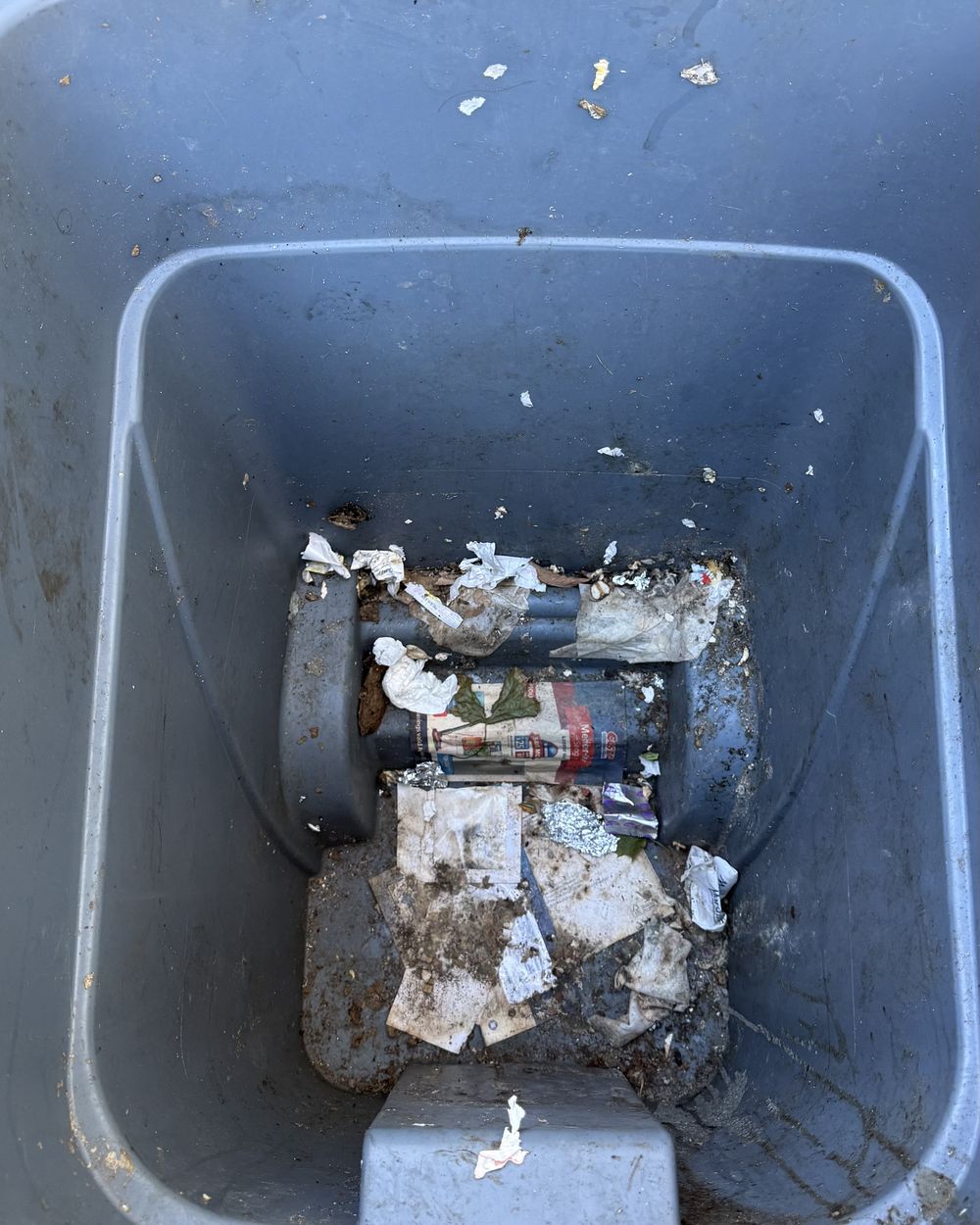
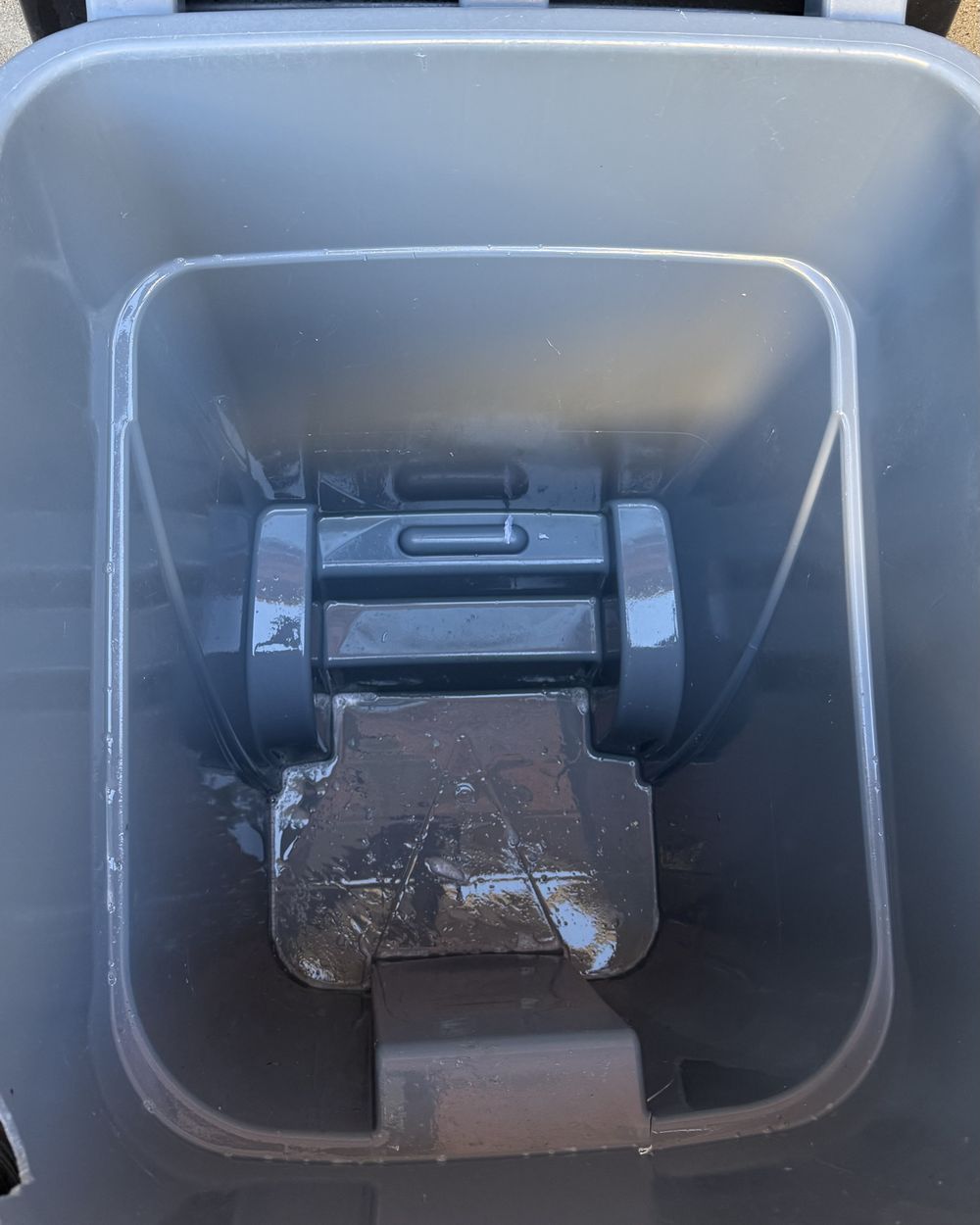
The moment our customers tell us about
This is our favorite part. After a cleaning, customers tell us the first thing they notice isn't how the bin looks. It's the smell, or rather, the lack of it. You lift the lid, brace yourself out of habit, and instead there's just a clean, fresh bin.
If you'd like that for your own bins, a one time cleaning is an easy way to try us. Or set up monthly or quarterly cleanings so the smell never gets a head start. New customers get $10 off their first cleaning.